Shop

>

Natural Stone Tiles

>

Travertine Tiles

Travertine Tiles

Huge Range, In Stock, Ready for Pickup or Delivery

Travertine Tiles Products

Match the Travertine Finish to the Room

Finish changes how travertine looks, feels and grips. Settle it before you pick a colour.

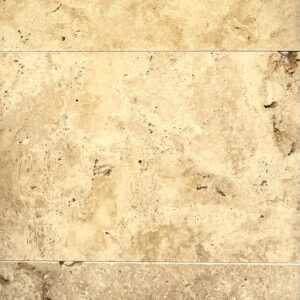
  • Tumbled: Rounded edges and a soft matte surface with a weathered, rustic character. It grips well underfoot, which is why it suits ensuite floors, pool surrounds and patios. It also hides wear well, so it holds up in busy parts of the house.
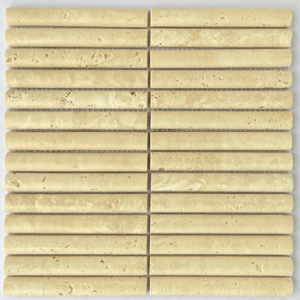
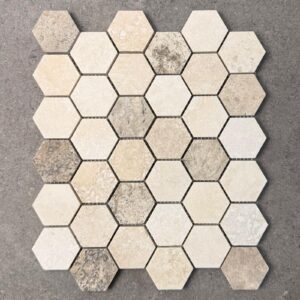
  • Honed: Smooth and matte with no shine. Honed travertine reads cleaner and more contemporary, so it works through hallways, living areas and kitchen floors. Pair it with natural stone mosaics for splashbacks, niches and shower floors.
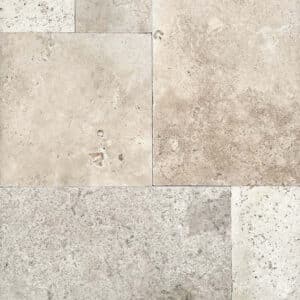
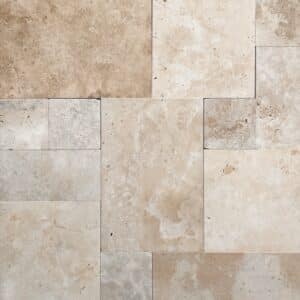
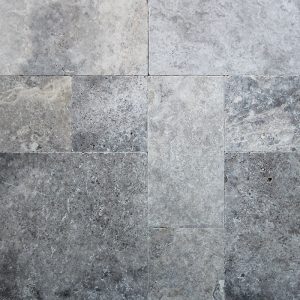
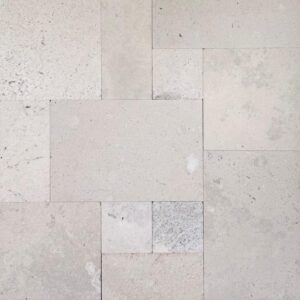
  • Brushed and sandblasted: The most textured of the finishes, with enough grit to handle weather and traffic. Both are common choices for pathways, courtyards and covered outdoor areas. Available in French pattern, a repeating layout that mixes several tile sizes.
  • Filled and unfilled: Travertine forms with natural pits and holes. On filled travertine, those pits are filled and smoothed before it ships, so you get an even surface that is easier to clean. Unfilled leaves them open for more texture and a rawer look. We stock both.

Travertine Tile Colours

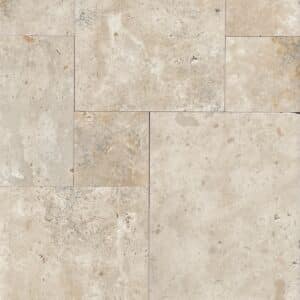
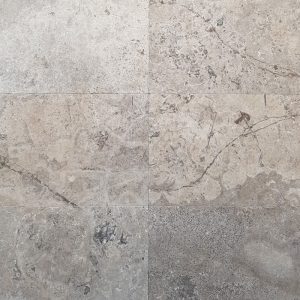
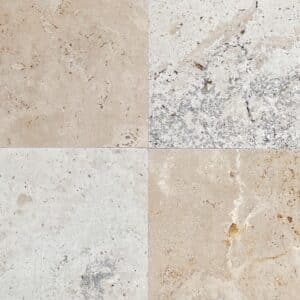
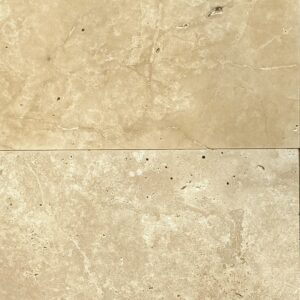
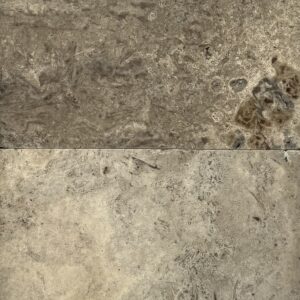
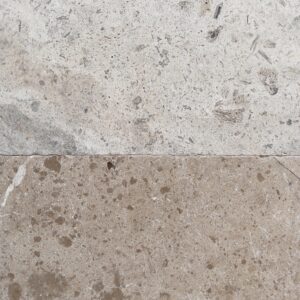
Light shades like ivory, white, silver and soft grey open a room up. They suit modern kitchens and living areas, and they work particularly well where there is good natural light.

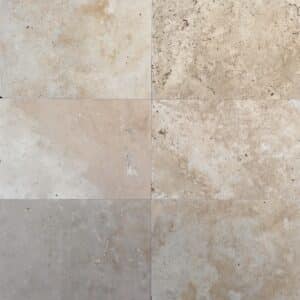
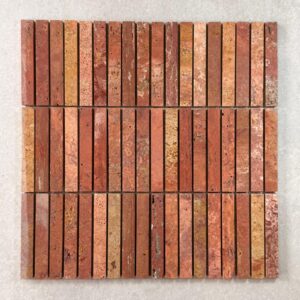
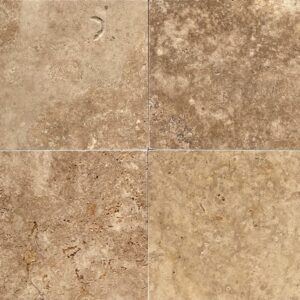
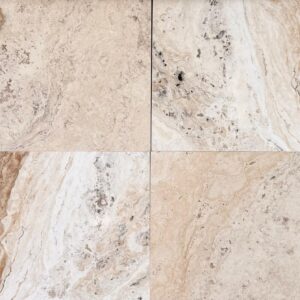
Walnut and mixed blends bring depth and contrast, which makes them a strong choice for bathroom walls and feature areas.

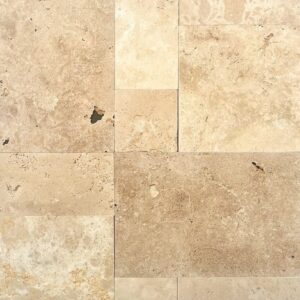
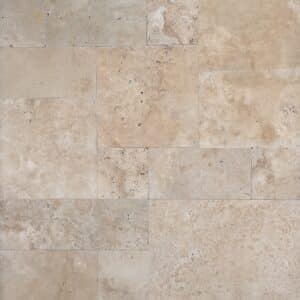
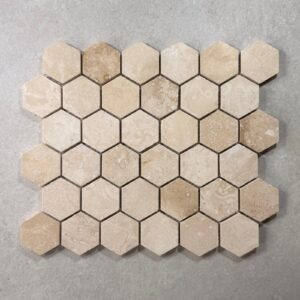
Beige and cream sit in the middle with a warmer, Mediterranean feel. They are the safe pick when a scheme needs to work indoors and out.

No two tiles carry the same patterns, so order from one batch where you can. That natural variation is what complements so many design styles, from traditional through to contemporary.

Travertine Tiles Room by Room

Bathrooms suit smaller formats. Travertine wall tiles and mosaics add texture without crowding the space, and tumbled finishes give you grip where the floor gets wet.

Kitchens work best with rectangular or smaller-format tiles for clean lines, whether that is a splashback or a full floor.

Living areas and hallways take the larger formats in our range well. Fewer grout lines make an open-plan space read as one surface rather than a grid.

Outdoors, travertine stays cool underfoot and handles Australian conditions without fading. For driveways and heavy-traffic outdoor areas that need a thicker stone, see our travertine pavers.

Buying Travertine Tiles at TFO

We import travertine tiles direct from the manufacturers, with no middlemen. That’s where the outlet price comes from. Tiles are priced per sqm, mosaics per sheet.

Natural stone varies batch to batch, and a photograph only takes you so far. Full-sized samples are available from $5, so you can check the stone against your own flooring, lighting and joinery before you commit. You can also use the Room Visualiser to see how a tile reads across a whole room.

Seeing the tile is one thing. Choosing is another. Book a free consultation with Stephanie, our in-house designer. With over 15 years in colour and interiors behind her, she’ll match travertine tiles to your style, budget and timeline.

Our Smithfield warehouse holds over 750,000m² of tile, so most travertine is in stock. Order in store before 2pm and you can collect from Smithfield the same day. Order online and we will email your invoice and collection time within 24 hours. You can also walk the range in person at our Smithfield and Alexandria showrooms.

Travertine Tiles FAQs

What are travertine tiles?

Travertine is a natural limestone, formed by calcium carbonate deposits around hot springs and in limestone caves. It is quarried stone, not a printed look-alike, which is why every tile has its own veining and colour. It suits classic and contemporary schemes equally, and works indoors and out.

How much do travertine tiles cost?

At TFO, travertine tiles start at $39 per square metre and run to $99 per square metre depending on finish, size and format. Mosaics are priced by the sheet rather than by area, from $20 a sheet, and work out dearer per square metre than standard formats. Travertine generally costs less than marble while giving you the same natural stone character. We import direct from the manufacturers, so you are buying at outlet prices.

Can I get a sample before I buy?

Yes. We sell full-sized samples from $5, so you are looking at the real tile rather than a small chip. Natural stone varies batch to batch, so this is the only reliable way to see how a colour reads in your own light. Samples are non-refundable.

How do I clean travertine tiles?

Sweep or vacuum first, then mop with warm water and a pH-neutral cleaner. Avoid anything acidic, so no vinegar, no lemon and no standard bathroom spray, as acid etches the stone. Wipe spills as they happen rather than letting them sit. For the full method, read our Complete Guide to Cleaning Travertine Tiles.

Do travertine tiles need sealing?

Yes. All of our natural stone needs sealing. Travertine is porous, so a penetrating sealer protects against stains and moisture without changing how the stone looks. Reseal every three to five years indoors, and every one to two years outdoors or around pools.

Are travertine tiles slippery when wet?

It depends on the finish. Polished travertine can get slippery. Tumbled and brushed finishes have enough surface texture to hold grip, which makes them the better choice for bathrooms, ensuites and pool surrounds.

Can travertine tiles be used outdoors?

Yes, and it is one of the better natural stones for it. Travertine stays cool underfoot in direct sun and handles harsh sun, heavy rain and coastal salt air without fading. Tumbled and brushed finishes are the right call outdoors for the extra grip.

How long do travertine tiles last?

With proper care, 50 to 100 years. Travertine holds up in high-traffic areas like hallways, kitchens and entryways. Indoor installations tend to outlast outdoor ones because of less weather exposure, though regular sealing keeps outdoor travertine performing for decades.

What colour grout works with travertine tiles?

Match the grout to the tile or go one shade lighter. Beige, cream and light grey all work well. A contrasting grout fights the natural variation in the stone instead of letting it show.

What are the disadvantages of travertine tiles?

Travertine is natural stone, so it asks a little more of you than porcelain does. It is porous and needs resealing every few years to keep stains out. It is softer than porcelain, so grit tracked in at an entry point will mark it over time. And polished finishes get slippery wet, which is why we stock tumbled and brushed for bathrooms and pool surrounds. None of it is hard to manage. Sealed and swept, travertine lasts 50 to 100 years.

What is the difference between tumbled, honed and brushed travertine?

Tumbled has a weathered, rustic feel and grips well, so it is the usual pick for wet areas and outdoor spaces. Honed is smooth and matte, which suits interiors. Brushed sits between the two with a soft texture that works in either. Some finishes come filled, where the natural pits are smoothed for a uniform surface, and others are left unfilled for more texture.

What is the difference between travertine tiles and travertine pavers?

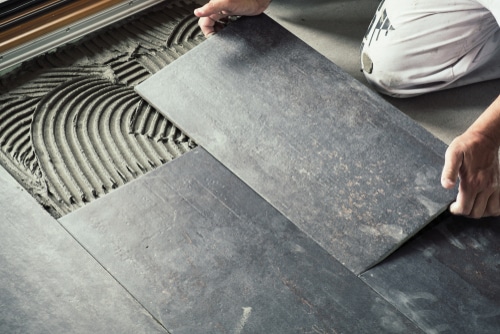
A paver is thick enough to carry weight on its own. A tile is not, so it has to be bonded to a solid surface like concrete with adhesive and grout. Travertine tiles are usually 12mm or 15mm, which suits indoor floors, walls, bathrooms and covered outdoor areas. Pavers are around 30mm and can be laid straight onto a compacted base, which is what a driveway, a large patio or a pool surround needs. You will
find a few thicker French pattern formats in this collection, with the full paver range under our travertine pavers.